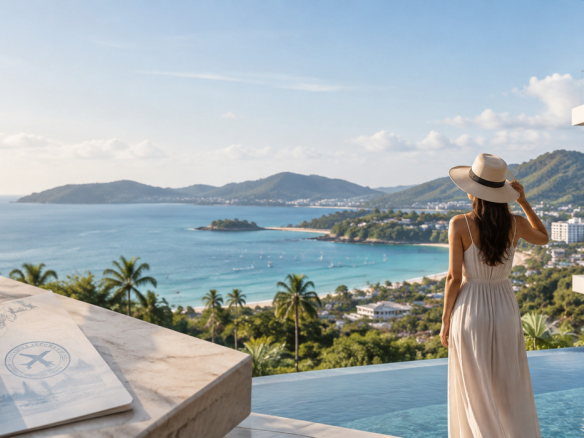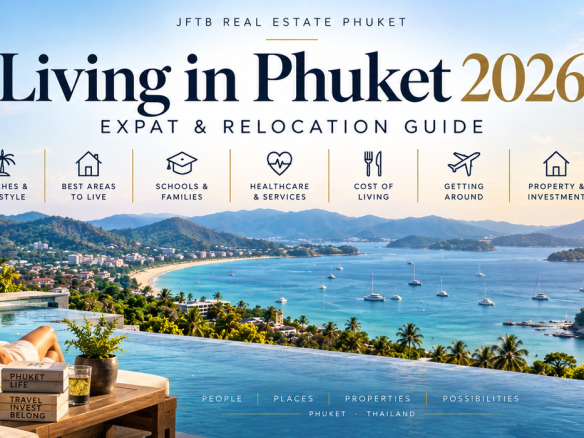
Thailand remains one of Asia’s most attractive destinations for international residents, retirees, entrepreneurs, families and property buyers.
Its appeal goes far beyond tourism. Climate, food, healthcare, international schools, transport connections, diverse landscapes and a wide choice of housing allow Thailand to support very different lifestyles.
For anyone considering living in Thailand long term, choosing the right location matters as much as choosing the right property. Bangkok, Phuket, Koh Samui, Chiang Mai and Hua Hin offer very different living costs, infrastructure, property markets and day-to-day experiences.
This guide to living in Thailand provides an overview of the country’s principal lifestyle destinations, living costs, real estate options and key considerations for foreign residents and property buyers.
The information is general and should not replace individual legal, tax, immigration or investment advice.
Living in Thailand: Key Facts
| Aspect | Detail |
|---|---|
| Capital | Bangkok |
| Currency | Thai baht (THB) |
| Time zone | GMT+7 |
| Official language | Thai |
| Climate | Tropical, with significant regional and seasonal variations |
| Main international hubs | Bangkok, Phuket and Chiang Mai |
| Popular long-stay destinations | Bangkok, Phuket, Chiang Mai, Koh Samui and Hua Hin |
| Typical long-stay residents | Families, retirees, entrepreneurs, professionals and lifestyle residents |
Thailand’s strength lies in its variety.
Someone seeking a major Asian capital will have very different priorities from a buyer looking for an island villa, retirement base or quieter provincial lifestyle.
Why People Choose to Live in Thailand
Thailand is no longer viewed simply as a holiday destination.
For many international residents, it has become a long-term base offering a combination of lifestyle, infrastructure and access to the wider Asian region.
Common advantages include:
- Warm climate
- Beaches, islands, mountains and major cities
- Strong food and hospitality culture
- International hospitals in major destinations
- International schools in Bangkok, Phuket, Chiang Mai and other centres
- Extensive domestic air connections
- Good regional connectivity
- Established expatriate and long-stay communities
- Wide choice of housing
- Lifestyle options ranging from major cities to islands and provincial towns
However, living in Thailand should not automatically be described as inexpensive.
Premium villas, imported goods, international education, private healthcare and island living can create substantial monthly costs.
The real cost depends primarily on location and lifestyle.
What New Residents Often Underestimate
One of the most common surprises for new residents is that housing is not always the expense that changes the budget most.
The combination of transport, international school fees and private health insurance can rival or exceed the housing budget people initially planned around.
Buyers and families who price these costs realistically before choosing a destination generally make better long-term decisions.
A villa that appears affordable can become much less attractive once daily transport, schooling, insurance, utilities and lifestyle costs are included.
Anyone planning on living in Thailand for several years should therefore evaluate the complete monthly lifestyle rather than focusing only on rent or property prices.
Best Places to Live in Thailand
There is no single best place to live in Thailand.
The right destination depends on whether you prioritise business, schools, healthcare, beaches, nightlife, retirement, property investment or lower living costs.
For people considering living in Thailand, testing the daily routine of a destination is often more useful than judging it from a holiday experience.
Phuket: International Island Lifestyle
Phuket combines tropical lifestyle with relatively sophisticated infrastructure.
The island offers:
- Beaches
- International schools
- Private hospitals
- Marinas
- Golf courses
- International restaurants
- Shopping
- Luxury property
- Direct international flights
- Large expatriate and long-stay communities
Different parts of Phuket appeal to very different residents.
Bang Tao, Laguna and Layan
Bang Tao, Laguna and Layan are particularly popular with families, international residents and luxury property buyers.
The area combines beach access, international schools, restaurants, branded developments and a substantial villa and condominium market.
It has developed into one of Phuket’s most established premium residential zones.
Kamala and Surin
Kamala and Surin combine attractive west-coast locations with luxury residences and high-end villas.
They may suit buyers seeking greater privacy while remaining relatively close to Phuket’s main lifestyle areas.
For a detailed property overview, see our Kamala Real Estate 2026 guide.
Buyers interested specifically in the luxury villa enclave around the Kamala headland can also review Millionaire’s Mile Phuket 2026.
Patong
Patong is Phuket’s principal tourism and entertainment centre.
Its property market is strongly influenced by tourism, rental demand and limited land availability.
It tends to appeal more to buyers prioritising central west-coast access, nightlife and tourism exposure than to residents looking for a quiet suburban environment.
For a closer look at the area, see our Patong Beach Phuket 2026 guide.
Rawai and Nai Harn
Rawai and Nai Harn have developed strong long-stay communities.
They appeal particularly to residents seeking a more relaxed southern Phuket lifestyle, with restaurants, beaches and year-round residential activity.
Bang Tao vs Rawai: The Daily Reality Matters
Something worth saying plainly is that the difference between Bang Tao and Rawai in everyday life is greater than the map distance suggests.
Families choosing between the two should not make the decision on property price alone.
School runs, traffic patterns, restaurant choices, shopping, beach access and the location of friends or activities can significantly change the daily experience.
Spending a few days testing the real routine in each area before buying can be more useful than visiting another ten properties.
Those differences tend to matter much more after six months than they do during a property viewing.
For deeper market analysis, see our Phuket Property Market 2026 Analysis guide.
Bangkok: Business, Healthcare and Urban Living
Bangkok is Thailand’s main business, financial, medical, educational and transport centre.
It offers:
- Extensive condominium inventory
- BTS and MRT transport
- International companies
- Specialist hospitals
- Universities
- International schools
- Shopping and entertainment
- Large domestic and international tenant markets
For property buyers, neighbourhood selection is critical.
Access to public transport, employment areas, schools and established residential demand usually matters more than broad claims about the Bangkok market.
A condominium five minutes from a major transport hub can have very different rental and resale characteristics from a similar unit in a less convenient area.
For people who prioritise business access, healthcare, education and urban convenience, Bangkok can provide a very different experience of living in Thailand from the island lifestyle offered by Phuket or Koh Samui.
Koh Samui: Island Living and Villa Market
Koh Samui appeals to retirees, long-stay residents and villa buyers seeking a smaller island environment.
The market includes substantial villa inventory, often in hillside or coastal locations.
Buyers should pay particular attention to:
- Land title
- Legal access
- Road quality
- Utilities
- Drainage
- Hillside construction
- Building permits
- Property management
- Rental legality
Island properties can offer an attractive lifestyle but may also require greater scrutiny of infrastructure and maintenance.
A spectacular view does not compensate for difficult road access, drainage issues or a problematic ownership structure.
Chiang Mai: Culture, Nature and Long-Stay Living
Chiang Mai offers a very different environment from Thailand’s major beach destinations.
Its attractions include:
- Historic city centre
- Northern Thai culture
- Universities
- Healthcare
- Cafés and restaurants
- Creative communities
- Mountains and national parks
- Lower housing costs in many areas
It can appeal to retirees, remote workers and residents seeking a slower lifestyle.
Seasonal air quality should, however, be considered when evaluating long-term living in northern Thailand.
For someone planning to live in Chiang Mai year-round, this is not a minor detail and should form part of the decision before relocating permanently.
Hua Hin: Relaxed Coastal Living
Hua Hin provides a quieter seaside lifestyle within relatively easy reach of Bangkok.
It is particularly popular with:
- Retirees
- Families
- Thai second-home owners
- Golfers
- Long-stay residents
The area offers hospitals, golf courses, markets, restaurants and a broad range of housing.
It may suit buyers who prioritise long-term personal use and a quieter lifestyle rather than a highly tourism-driven investment strategy.
Cost of Living in Thailand
The cost of living in Thailand varies considerably by destination and lifestyle.
Local food, services and accommodation can remain relatively affordable.
However, expenses can rise quickly when lifestyle choices include luxury housing, international schools, imported groceries, private hospitals, cars, frequent international travel, premium restaurants, large villas, domestic staff or private insurance.
| Destination | Relative Cost | Major Cost Factors |
|---|---|---|
| Bangkok | Moderate to high | Central accommodation, international education, transport, premium services |
| Phuket | Moderate to high | Coastal housing, vehicles, international schools, imported goods, island logistics |
| Koh Samui | Moderate to high | Transport, utilities, imported goods, villa maintenance |
| Chiang Mai | Moderate | Housing location, healthcare, transport, personal lifestyle |
| Hua Hin | Moderate | Housing, private healthcare, transportation, leisure activities |
A realistic relocation budget should consider more than rent.
Include:
- Housing
- Deposits
- Electricity
- Water
- Internet
- Transport
- Insurance
- Healthcare
- Visa costs
- Food
- Education
- Travel
- Emergency reserves
The cheapest property is not necessarily located in the cheapest place to live once the full lifestyle is considered.
Thailand Property and Foreign Ownership: The Essentials
Property decisions are an important part of living in Thailand, particularly for international residents considering whether to rent first or purchase a long-term home.
Thailand’s property market is highly segmented.
A foreign-freehold condominium in Bangkok, a luxury villa in Phuket and a leased property in Koh Samui cannot be analysed using the same assumptions.
Foreign buyers commonly consider:
- Foreign freehold condominiums
- Luxury villas
- Branded residences
- Off-market properties
- Long-term rental properties
- Off-plan developments
No property type automatically guarantees appreciation or rental income.
Foreign Freehold Condominiums
Foreign freehold condominiums provide one of the clearest direct ownership routes available to international buyers within the applicable foreign ownership quota.
However, ownership clarity alone does not make a condominium a good investment.
Price, building quality, management and resale demand remain important.
Leasehold Property
Leasehold provides registered rights for an agreed term.
Renewal promises should not automatically be treated as guaranteed.
The registered legal position is more important than marketing language.
Villas and Land
Villas can involve separate rights over land and building.
Depending on the property, buyers may encounter leasehold land, separate building ownership, usufruct, superficies or an existing corporate structure.
The complete arrangement should be reviewed independently.
Thai Companies
A Thai company should never be used as a nominal device to allow a foreign buyer to control land.
Nominee shareholder arrangements carry serious legal and financial risk.
Where a company legitimately owns a property, both the company and the property require proper due diligence.
Rental Returns
Rental yields advertised by developers or agents should be treated as projections unless supported by verifiable operating records.
Gross income and net return are not the same figure.
Management fees, vacancy, repairs, common-area charges, insurance and other costs can materially affect the final result.
This section is intentionally a summary.
For a full analysis of ownership structures, investment risk, due diligence and rental returns, see Thailand Real Estate Investment 2026.
Common Mistakes Foreign Residents and Buyers Make
Some mistakes occur repeatedly when people move to or buy property in Thailand.
Choosing a Location from a Holiday, Not a Routine
A place that is perfect for a two-week holiday may not suit a daily school run, commute, grocery routine or long-term social life.
Experience the routine before committing.
Underestimating Recurring Costs
Cars, health insurance, schooling, utilities and property maintenance can significantly change the real cost of living.
Buying Emotionally
A property can be attractive without being a good financial decision.
Lifestyle appeal and investment logic should be considered separately.
Paying Before Legal Review
Avoid paying a substantial non-refundable deposit before the important ownership and legal issues have been checked.
Assuming Lease Renewals Are Guaranteed
Contractual renewal language should not be confused with the registered initial lease term.
Ignoring Resale or Exit Demand
Before buying, ask:
Who is likely to buy this property from me later?
A property with weak resale demand can become difficult to exit even if it appears attractive today.
Moving to Thailand: Think Long Term
Successful living in Thailand depends on more than climate, property prices and cost of living.
Prospective residents should consider:
- Healthcare
- Insurance
- Immigration status
- Schools
- Transport
- Housing
- Banking
- Language
- Local infrastructure
- Social environment
- Long-term financial reserves
For official information on visa applications, see the Thai E-Visa official website
The best destination is not necessarily the one that creates the strongest first impression.
It is the one that continues to work once daily life replaces the initial excitement of relocation.
For many newcomers, renting first can be a sensible way to understand an area before making a major property commitment.
This is particularly useful when comparing areas that look similar on paper but produce very different daily routines.
Why Work With JFTB Real Estate Phuket?
Established in 2013, JFTB Real Estate Phuket assists international buyers with property selection, market comparison, negotiation and coordination with independent legal professionals.
Our approach focuses on helping buyers understand what they are purchasing, how it compares with alternative opportunities and where the main risks may lie before committing capital.
JFTB’s principal expertise is Phuket, while broader Thailand market knowledge helps buyers compare locations and strategies before deciding where to live or invest.
For buyers considering living in Thailand long term, the objective should be to choose a location and property that continue to make sense after the initial attraction of the destination has passed.
FAQ — Living in Thailand 2026
Is Thailand a Good Place to Live?
Thailand can offer a high-quality lifestyle for international residents, with warm weather, healthcare, food, travel connections and diverse destinations.
The right location depends on budget, lifestyle and long-term priorities.
What Are the Best Places to Live in Thailand?
Bangkok, Phuket, Chiang Mai, Koh Samui and Hua Hin are among the most established destinations for international residents.
Each offers a very different lifestyle, infrastructure and cost profile.
Is Living in Thailand Expensive?
Living in Thailand can be relatively affordable depending on location and lifestyle.
However, premium housing, private healthcare, international schools, imported products and frequent travel can make monthly costs substantially higher.
Can Foreigners Buy Property in Thailand?
Foreigners may directly own qualifying condominium units within the applicable foreign ownership quota.
Villas and land involve different ownership considerations and require additional legal analysis.
Is Phuket or Bangkok Better for Property Investment?
Neither is universally better.
Phuket is more heavily influenced by tourism, lifestyle and resort demand, while Bangkok generally offers deeper urban and year-round residential demand.
Is Buying Property in Thailand Safe?
It can be when the property, ownership structure, title, contracts and transaction are properly reviewed.
Independent due diligence is strongly recommended before committing significant funds.
Can Foreigners Buy Villas in Thailand?
Foreign buyers can acquire interests in villas, but land and building rights must be considered separately because foreign land ownership is generally restricted.
Should I Buy Property Before Moving to Thailand?
For many new residents, renting first can provide valuable experience of the area before making a long-term property commitment.